


The Role of a Quantity Surveyor in Value Engineering
As construction projects face increasing pressure to deliver efficiency, sustainability and whole-life performance, value engineering has become an essential tool.
Understanding value engineering in construction
Value engineering is often misunderstood as a simple cost-cutting exercise – a process of stripping back design elements to achieve savings. In reality, it is a structured approach to optimise the balance between cost, function, quality, and performance across the lifecycle of a project.
By understanding the project and its requirements, value engineering is achieved by introducing alternative materials, construction methods and design solutions that maintain or improve performance while reducing cost.
For quantity surveyors, value engineering is not only about betterment of cost, but also about maintaining or enhancing functionality, sustainability and performance in order to deliver long-term value to the client.
The value engineering process
Value engineering should be proactive, beginning at concept and design development stages where the opportunity for influence is greatest and the cost of change is lowest. This may involve identifying alternative construction methods – such as offsite manufacture or modular systems, or more efficient building envelopes. At later stages, value engineering may focus on refining specifications, improving buildability, or driving supply chain efficiencies.

Talk to our experts

The phases of value engineering

The quantity surveyor's role
The QS is uniquely placed to support and lead the value engineering process throughout the project lifecycle and at each stage of the value engineering process. They bring together financial and strategic insights that ensure well-informed decisions from recommendations that are robust, transparent and aligned to the project objectives.
Key contributions include:
- Feasibility studies: Assessing early design concepts and proposals to identify opportunities for value engineering, including evaluating alternative materials, construction methods and design solutions.
- Cost estimating and benchmarking: Developing detailed cost estimates, updating budgets and reviewing benchmarking documents to highlight high-cost areas and propose alternative materials, systems, or efficiencies to optimise expenditure.
- Lifecycle costing: Analysing long-term operational, maintenance, and replacement costs to maximise whole-life value and ensure decisions consider long-term value, not just initial outlay.
- Tendering: Evaluating design or specification changes to enhance value, including contractor proposals, and recommending more efficient construction methods or systems.
- Change control / Variations: Applying value engineering to project variations to minimise cost and distribution while delivering optimal value within project objectives.
Quantity surveyors play a key role in facilitating collaborative problem-solving, bringing together multi-disciplinary teams of designers, engineers, contractors and cost consultants through structured value engineering workshops and review sessions to generative innovative solutions.
Conclusion
When applied properly, value engineering is a disciplined and creative process that enhances the overall worth of a project not simply its cost profile. It challenges assumptions, explores alternatives, and ensures that every pound spent contributes meaningfully to project objectives. By aligning resources with key outcomes from initial concept to completion, value engineering delivers maximum value for all stakeholders.
Value Engineering in Practice
Case study: Paddington Square
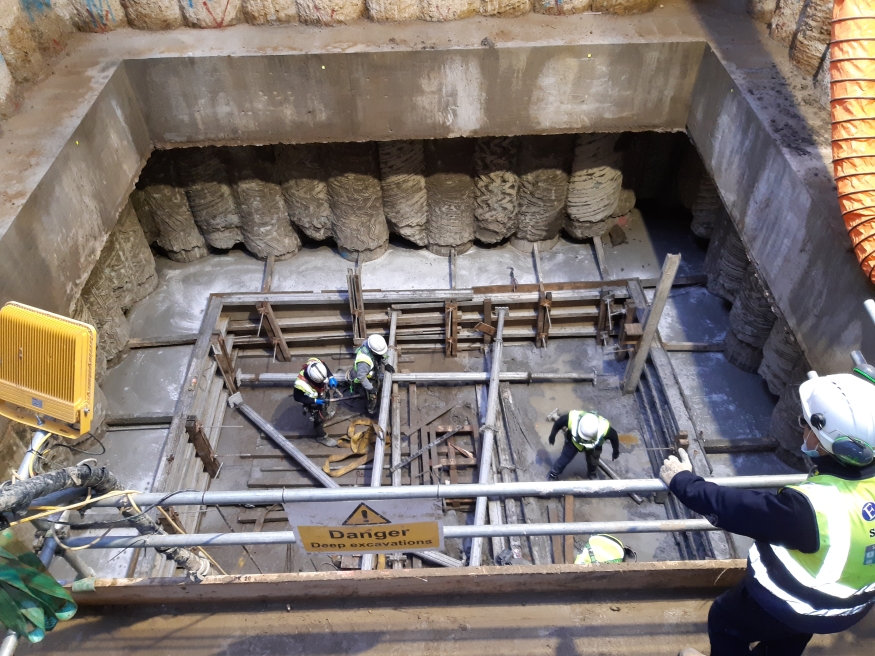
Paddington Square is a 14-storey, glass-clad building on 3-storey podiums, with a total of 350,000 sq ft of office, retail, and restaurant space in central London. The project was carried across various stages to ensure compliance with regulatory requirements, as well as time and budgetary constraints.
SOCOTEC Forensics & Advisory was involved in the project for over five years across different phases, providing contract negotiation and contractual correspondence, cost control and monitoring, change control, value engineering, interim valuations and payments, final account review and agreement, risk management, and performance measurement.
Phase 2 of the project consisted of pile enabling, secant walls and bearing piles, temporary works to facilitate bulk excavation and a top-down-bottom-up construction. During tendering of the temporary works package, a value engineering exercise was carried out to assess the cost, quality and time benefits of two different options:
- Option 1: Purchasing traditional steep props to utilise during basement excavation and selling them back to reduce overall costs
- Option 2: Hiring adjustable engineering temporary props from specialist engineer supplier
Our team prepared a detailed analysis of each option, summarised below.
Paddington Square is a 14-storey, glass-clad building on 3-storey podiums, with a total of 350,000 sq ft of office, retail, and restaurant space in central London. The project was carried across various stages to ensure compliance with regulatory requirements, as well as time and budgetary constraints.
SOCOTEC Forensics & Advisory was involved in the project for over five years across different phases, providing contract negotiation and contractual correspondence, cost control and monitoring, change control, value engineering, interim valuations and payments, final account review and agreement, risk management, and performance measurement.
Phase 2 of the project consisted of pile enabling, secant walls and bearing piles, temporary works to facilitate bulk excavation and a top-down-bottom-up construction. During tendering of the temporary works package, a value engineering exercise was carried out to assess the cost, quality and time benefits of two different options:
- Option 1: Purchasing traditional steep props to utilise during basement excavation and selling them back to reduce overall costs
- Option 2: Hiring adjustable engineering temporary props from specialist engineer supplier
Our team prepared a detailed analysis of each option, summarised below.
Option 1: Traditional Steel Propping System | Option 2: Specialist Temporary Propping (Conquip) |
|---|---|
Procurement strategy: Purchase and resale model Key benefits:
| Procurement strategy: Hire arrangement with specialist suppliers Key benefits:
|
SOCOTEC Forensics & Advisory recommended Option 2 based on the following critical factors:

Financial advantage
- Substantial cost saving of £260,000 against the approved budget
Risk transfer
- Complete liability allocation to the specialist contractor for design and installation phases
Sustainability
- Environmentally responsible solution through component reusability
Technical expertise
- Access to specialist knowledge and proven temporary works solutions
Value Engineering through Quantity Surveying Services
How SOCOTEC Forensics & Advisory can support value engineering

As quantity surveyors, SOCOTEC Forensics & Advisory can provide significant support with value engineering through its comprehensive expertise across the project lifecycle, helping to reduce cost without compromising on functionality or quality.
Here’s where we can help with value engineering:
- Feasibility studies
- Cost estimating and benchmarking
- Lifecycle costing
- Tendering
- Change control/Variations
- Facilitation of value engineering workshops
As quantity surveyors, SOCOTEC Forensics & Advisory can provide significant support with value engineering through its comprehensive expertise across the project lifecycle, helping to reduce cost without compromising on functionality or quality.
Here’s where we can help with value engineering:
- Feasibility studies
- Cost estimating and benchmarking
- Lifecycle costing
- Tendering
- Change control/Variations
- Facilitation of value engineering workshops
Want to find out more about our services?